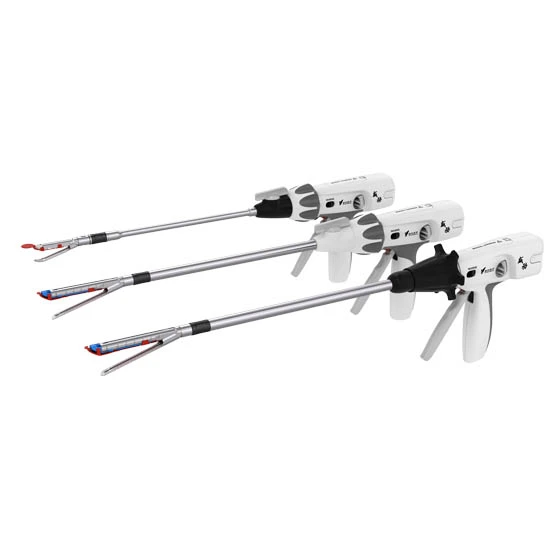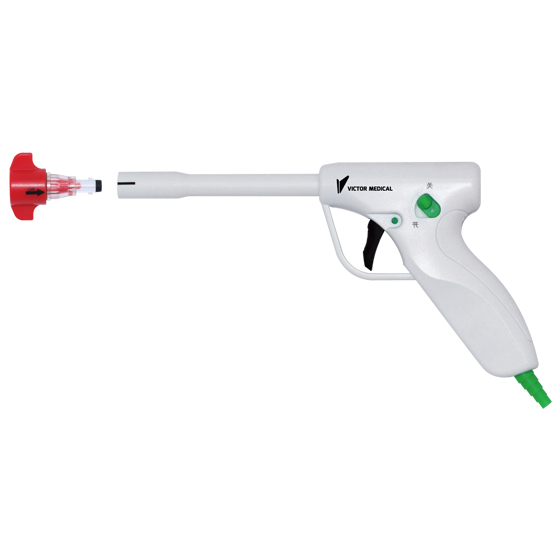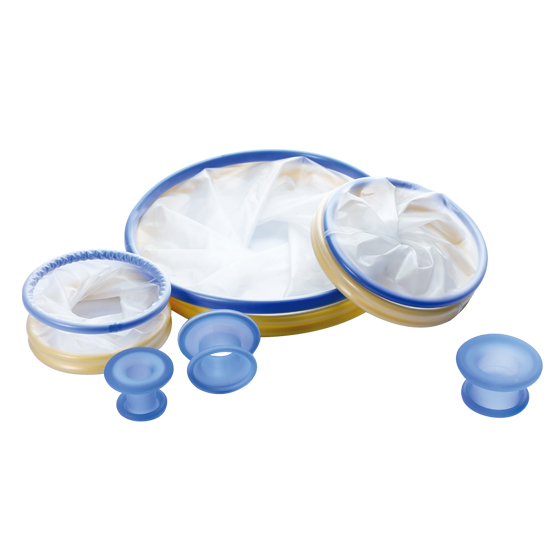


A bladeless trocar and a bladed trocar perform the same fundamental role: creating and maintaining an access port for instruments during minimally invasive surgery. The main difference is the entry-tip design. Bladeless trocars separate and dilate tissue fibers during insertion, while bladed trocars use a sharpened cutting tip to penetrate tissue.
For hospitals, distributors, and surgical teams evaluating disposable laparoscopic access devices, trocar selection should go beyond the choice between a bladeless and bladed tip. Diameter, cannula length, sealing structure, fixation, optical access, instrument compatibility, and single-use configuration should also be considered according to the intended surgical application.
The most important difference is how the trocar passes through the abdominal wall.
A bladeless medical trocar typically uses a tapered or specially shaped obturator that separates tissue fibers instead of cutting them with a blade. J&J describes its bladeless trocar design as separating along tissue fibers during insertion, while Medtronic uses a non-bladed “dolphin-nose” tip for trocar placement.
A bladed trocar uses a sharp cutting element. Some designs incorporate a shield intended to cover the blade after entry into the abdominal cavity. Medtronic notes that its bladed trocar requires relatively low insertion force because of its sharp design, while also warning that excessive force or an exposed blade can increase the risk of internal injury.
For hospitals evaluating a trocar tool, tip design is only one parameter. Important performance characteristics also include:
Abdominal-wall fixation
Seal reliability and pneumoperitoneum maintenance
Instrument compatibility
Insertion control
Cannula stability
Ergonomic handling
Available diameter and length options
A trocar should therefore be evaluated as a complete laparoscopic access system rather than simply as a puncture device.
Victor Medical's single use laparoscopic trocar incorporates a patented bladeless olecranon design. Instead of using a conventional cutting blade, the specialized obturator is designed to facilitate tissue separation during insertion.
The Victor Medical bladeless trocar combines this entry-tip design with sealing and fixation features to support laparoscopic access. The product portfolio includes standard trocars, pediatric trocars, optical trocars, and extra-long trocar configurations for different surgical requirements.
Key features of Victor Medical's single-use bladeless trocar portfolio include:
Patented bladeless olecranon design
One-way thread design for abdominal-wall fixation during penetration
Elastic sealing structure for leakage prevention
Universal seal design to accommodate instruments within the specified range
Medical-grade PC material
Solid and flexible obturator design options
12 mm optical trocar configuration for visual access during insertion
Standard and extra-long configurations
These features make Victor Medical's bladeless trocar a potential option for hospitals and distributors looking for a disposable laparoscopic trocar with multiple configurations for different procedures and patient anatomies.
In addition to its bladeless trocars, Victor Medical also offers the Single Use Trocars (VTBE) series, providing another solution for disposable laparoscopic access.
The VTBE single-use trocar incorporates a three-in-one sealing ring structure designed to support air-tight sealing, a two-sided plastic conehead designed to facilitate puncture, and a freely rotating converter cap for convenient operation. The system also features a forward Luer lock adapter and an optical puncture function in applicable configurations.
With multiple configurations available, Victor Medical Single Use Trocars can support different laparoscopic procedures and instrument requirements while helping hospitals and distributors build a more comprehensive disposable trocar offering.
Laparoscopic trocar sizes should primarily be selected according to the instruments that must pass through the port. Commercial trocar portfolios commonly include several diameters rather than one universal size. J&J, for example, offers laparoscopic access devices from 5 mm to 15 mm, while Victor Medical provides 5 mm, 10 mm, 12 mm and 15 mm configurations.
A 5 mm port is suitable when the planned laparoscopic instruments are compatible with a 5 mm cannula. It can therefore be useful for creating smaller accessory access points, depending on the procedure and instrument set.
Victor Medical's 5 mm single-use trocar configurations are designed for laparoscopic procedures requiring a smaller working channel, with the applicable cannula length and sealing configuration selected according to the intended procedure.
A 10 mm trocar provides a larger working channel than a 5 mm device and should be selected when the intended instruments require that port diameter. Victor Medical's standard VTB10 configuration has a nominal 10 mm diameter and 96 mm length.
For hospitals and distributors, a 10 mm trocar can provide an intermediate option between 5 mm accessory ports and larger 12 mm or 15 mm access ports, depending on the required instruments and procedure.
The 12 mm trocar provides additional diameter for devices requiring a larger access channel. However, buyers should not assume that every instrument smaller than the nominal trocar diameter is automatically compatible. Seal systems have defined instrument ranges, and using an incompatible diameter can affect pneumoperitoneum. Medtronic, for example, specifies particular compatible instrument ranges for its 11 mm and 12 mm trocar seals.
For procurement, the key rule is simple: match trocar diameter with the instruments specified for the procedure and verify compatibility in the manufacturer's IFU.
Victor Medical's trocar portfolio extends to 15 mm configurations, giving hospitals and distributors more options when matching trocar diameter with different laparoscopic instruments and procedures.
Trocar diameter determines the working-channel size, while trocar length determines whether the cannula can provide appropriate access through the patient's abdominal wall.
Standard-length trocars are suitable for routine access where the required working depth falls within their specified range. Extra-long designs provide additional cannula length when greater access depth is required.
Victor Medical, for example, offers standard 5, 10, 12 and 15 mm configurations as well as extra-long 5, 10, 12 and 15 mm models. Its 10 mm standard trocar is 96 mm long, while the 10 mm extra-long version is 147 mm. Medtronic likewise offers certain bladeless trocar configurations in different lengths, including a 150 mm long 5 mm model.
Hospitals and distributors should therefore evaluate diameter and length as separate specifications. Ordering a correct diameter with an unsuitable cannula length can still compromise access and handling.
When sourcing a trocar used in laparoscopic surgery, comparing price alone provides an incomplete picture. Buyers should evaluate the complete access system.
Important considerations include:
Tip design: Determine whether the clinical users require bladeless, bladed, blunt, optical or another access configuration.
Size portfolio: A supplier offering multiple diameters can support a wider range of laparoscopic procedures. Victor Medical's current bladeless portfolio includes standard and extra-long options from 5 mm through 15 mm.
Seal performance: The valve and seal should maintain pneumoperitoneum while allowing appropriate instrument movement. Manufacturer-specified instrument compatibility should always be checked.
Port fixation: Cannula movement during instrument exchange can interrupt workflow. Fixation features should therefore be assessed together with insertion performance.
Sterility and traceability: For a disposable medical trocar, hospitals and distributors should verify sterile packaging, shelf life, labeling, regulatory documentation, lot traceability and single-use instructions.
Procedure-specific configuration: Trocar diameter, length and quantity should correspond to the intended laparoscopic procedure rather than relying on one standard SKU for every department.
A trocar used in laparoscopic surgery creates and maintains an access channel through which endoscopes and other minimally invasive instruments can enter the operative cavity. It also commonly incorporates sealing components to help maintain pneumoperitoneum.
A bladeless trocar avoids a cutting blade and uses tissue-separating or dilating entry, but it should not be described as risk-free. Both trocar types require appropriate surgical technique, adequate pneumoperitoneum where applicable and careful control of insertion depth and direction.
Victor Medical's bladeless trocar uses a patented olecranon obturator rather than a conventional cutting blade. As with any laparoscopic access device, appropriate surgical technique and compliance with 《Instructions for Use 》remain essential.
Commercial systems are available across several diameters. Frequently offered sizes include approximately 5 mm, 10/11 mm, 12 mm and 15 mm, although the exact portfolio varies by manufacturer. Victor Medical offers 5, 10, 12 and 15 mm bladeless trocar configurations.
Start with the procedure's instrument diameters and required access depth. Then compare trocar tip design, cannula length, seal compatibility, fixation, ergonomics and the manufacturer's intended use. For hospitals and distributors looking for single-use bladeless trocars, disposable laparoscopic trocars or extra-long trocars, Victor Medical offers a comprehensive portfolio designed around different surgical access requirements.

 English
 français
 Español
 italiano
 русский
 Türkçe
 português
 العربية