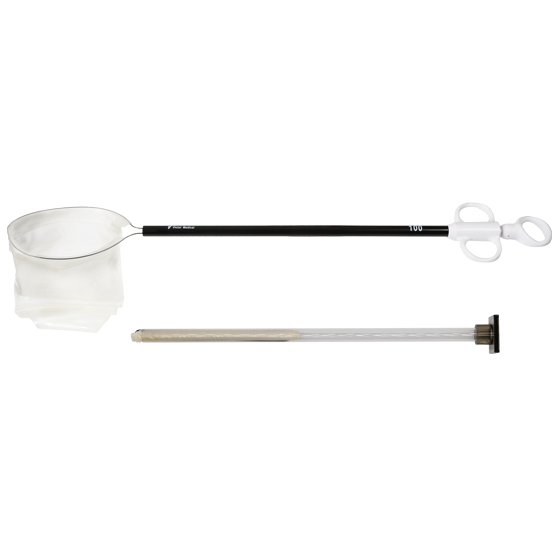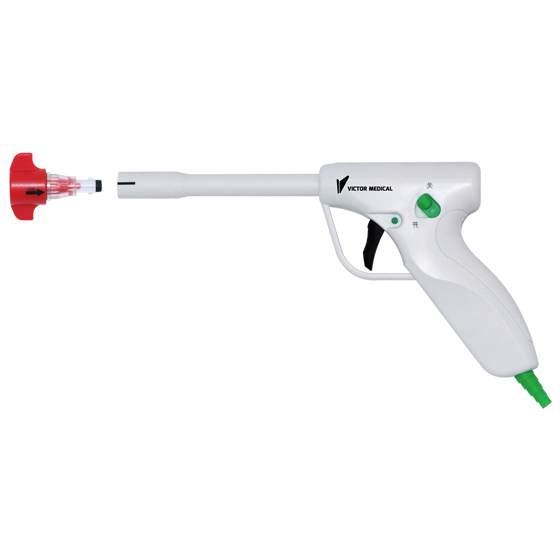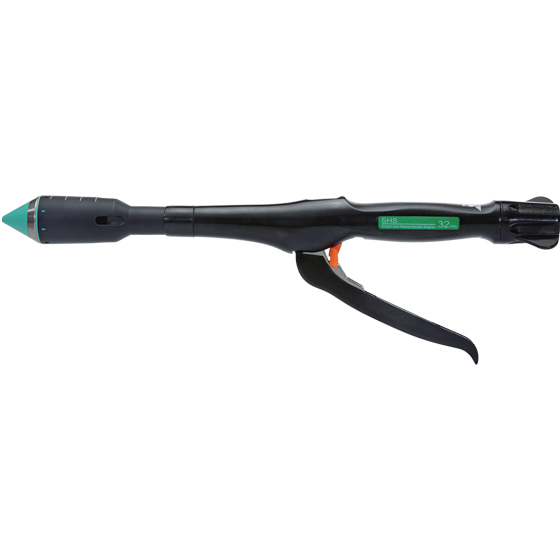


The main difference between linear staplers and linear cutter staplers is whether the device only closes tissue or performs cutting and stapling during the same firing sequence. A conventional linear stapler creates straight rows of staples without dividing the tissue, while a linear cutter stapler incorporates a cutting blade that separates tissue between parallel staple lines.
Both devices are used in gastrointestinal, thoracic, and other surgical procedures, but they serve different operative purposes. For hospitals and medical distributors, selecting the appropriate instrument requires evaluating the intended procedure, staple formation, tissue thickness, cutting requirements, and available product specifications.
Although both instruments use surgical staples to approximate tissue, their mechanical structures and functions are different.
A closure-only linear stapler typically places staggered staple rows across the selected tissue without incorporating a cutting mechanism. Surgeons may use this type of instrument when tissue closure is required without simultaneous division.
A linear cutter stapler combines tissue stapling and cutting. Its firing mechanism deploys staples on both sides of a cutting pathway while an integrated knife divides the tissue between the staple lines.
| Feature | Linear Stapler | Linear Cutter Stapler |
| Primary function | Tissue closure | Simultaneous tissue cutting and stapling |
| Cutting blade | No integrated cutting function | Integrated cutting mechanism |
| Staple arrangement | Straight staggered staple rows | Parallel staple lines on both sides of the cutting path |
| Tissue division | Requires a separate cutting step when division is needed | Performed during the firing sequence |
| Typical applications | Closure of suitable tissue stumps and surgical openings | Resection, transection, and selected anastomotic procedures |
| Selection priority | Closure length, tissue thickness, and staple formation | Cutting length, staple formation, reload compatibility, and tissue thickness |
The terms are sometimes used inconsistently in product catalogs. Buyers should therefore confirm whether a particular device has an integrated knife rather than relying on its product name alone.
For example, Victor Medical's disposable linear cutter stapler is designed to place two double staggered rows of titanium staples while simultaneously cutting and dividing tissue between the rows. This combined mechanism distinguishes it from a closure-only linear stapler.
Closure-only linear staplers are designed for surgical situations where tissue must be closed or sealed without being divided by the same instrument.
They may be used in selected gastrointestinal and thoracic procedures, depending on the manufacturer's approved indications and the tissue characteristics involved.
Conventional linear staplers can be used to close appropriate tissue stumps, including selected gastrointestinal or bronchial structures. The stapler places rows of staples across the tissue to establish a mechanical closure.
When tissue division is also required, the surgeon must use a separate appropriate technique or instrument.
One advantage of a closure-only design is that stapling and tissue division can remain separate steps when the operative technique requires this distinction.
However, this does not mean closure-only staplers are automatically safer. Their suitability depends on tissue thickness, tissue condition, staple configuration, and correct surgical technique.
Hospitals should evaluate:
Required staple-line length
Staple height and tissue compatibility
Jaw alignment and tissue compression
Consistency of staple formation
Manufacturer-approved surgical indications
The device should only be used on tissue within its validated operating range.
A linear cutter stapler combines mechanical tissue compression, staple deployment, and cutting within a coordinated firing mechanism.
Before firing, the tissue is positioned between the cartridge and anvil. The instrument compresses the tissue according to its operating design.
During firing, staples are deployed and formed against the anvil while an integrated knife divides the tissue between the parallel staple lines.
This combined function is useful when tissue must be divided while staple closure is established along the cut edges.
Victor Medical's disposable linear cutter stapler is designed for this simultaneous cutting-and-stapling process. According to the manufacturer's published product information, its design incorporates an automatic knife protector, a floating reload mechanism, adjustable bidirectional firing control, and a reinforced instrument body. These features address different aspects of firing control, instrument closure, and staple formation.
Consistent staple formation is essential for creating the intended tissue closure.
Important design factors include:
Staple geometry: Influences the final shape of the formed staples.
Cartridge alignment: Supports accurate staple placement.
Tissue compression: Helps achieve appropriate conditions before firing.
Knife movement: Must provide controlled tissue division along the designated cutting pathway.
Firing reliability: The device should complete the intended cutting and stapling sequence.
When evaluating Victor Medical linear cutter staplers, buyers can review these general performance considerations alongside the manufacturer's published design features. Product evaluation should also consider the applicable instructions for use, intended tissue application, and model-specific specifications rather than relying on individual features alone.
Linear cutter staplers are commonly used in selected abdominal, gastrointestinal, thoracic, gynecological, and pediatric operations.
Depending on the device's intended use, applications may include bowel transection, gastric resection, tissue division, and creation of certain gastrointestinal anastomoses.
Device selection should account for the required cutting length, tissue thickness, surgical access, and the operator's experience.
Both closure-only and cutting staplers must be matched to the tissue being treated. Incorrect staple-height selection may result in inadequate tissue compression or undesirable tissue damage.
Manufacturers commonly provide specifications for unformed staple height, formed staple height, and the intended tissue thickness range.
Victor Medical's disposable linear cutter stapler range includes models with different staple heights and staple-line lengths, giving hospitals and distributors specific configurations to compare when assessing procedural requirements.
The following table summarizes selected models and specifications published by Victor Medical.
| Model | Listed Suture Length | Staple Quantity | Unformed Staple Height | Formed Staple Height |
| SLC60B | 63 mm | 64 | 3.8 mm | 1.5 mm |
| SLC80B | 83 mm | 84 | 3.8 mm | 1.5 mm |
| SLC100B | 103 mm | 104 | 3.8 mm | 1.5 mm |
| SLC60G | 63 mm | 64 | 4.8 mm | 2.0 mm |
| SLC80G | 83 mm | 84 | 4.8 mm | 2.0 mm |
| SLC100G | 103 mm | 104 | 4.8 mm | 2.0 mm |
These specifications represent selected models from Victor Medical's published product range. Buyers should verify the exact model, compatible tissue thickness, reload specifications, and current availability before ordering.
Additional specifications are available on the Victor Medical Linear Cutter Stapler product page.
Hospitals and surgical device distributors should consider the complete operating mechanism and product specifications rather than selecting a device based only on price or staple-line length.
| Evaluation Item | Procurement Requirements |
| Device Function | Confirm closure-only or integrated cut-and-staple operation |
| Staple-Line Length | Verify available lengths for the intended procedure |
| Staple Specifications | Review staple height, configuration, and tissue thickness compatibility |
| Cutting Mechanism | For cutter models, evaluate knife movement and cutting performance |
| Reload Compatibility | Confirm compatible cartridges, model numbers, and permitted firing cycles |
| Safety Features | Evaluate firing controls, closure indicators, and applicable lockout mechanisms |
| Sterilization | Confirm sterilization validation, packaging integrity, and shelf life |
| Supplier Documentation | Request applicable regulatory documentation, product specifications, and quality records |
Victor Medical's disposable linear cutter stapler incorporates several mechanical features intended to support reliable operation.
Automatic knife protection: A protective mechanism designed to reduce the possibility of unintended knife activation.
Floating reload design: Supports appropriate instrument closure before firing.
Bidirectional firing control: Allows operation according to different user preferences.
Reinforced instrument body: Designed to maintain mechanical stability during permitted firing operations.
Victor Medical also offers endoscopic linear cutting staplers for minimally invasive procedures. These devices differ from conventional open-surgery staplers in shaft configuration, maneuverability, and access requirements.
Hospitals and distributors can review additional products in the Victor Medical Open Surgical Instruments category.
For procurement enquiries, buyers should provide the required device function, staple-line length, tissue application, preferred model, expected order quantity, and destination market. This information helps the manufacturer identify suitable configurations and provide relevant technical documentation.
Linear staplers and linear cutter staplers serve different surgical purposes. Closure-only devices establish straight staple lines without dividing tissue, while linear cutter staplers combine tissue division and stapling in a single firing sequence.
The appropriate choice depends on the surgical procedure, tissue characteristics, required cutting or closure length, and device-specific performance.
For hospitals and medical distributors, evaluating staple formation, mechanical reliability, cartridge compatibility, and regulatory documentation is essential for selecting suitable surgical stapling instruments.
Victor Medical supplies disposable linear cutter staplers in multiple sizes and staple configurations. Buyers can contact Victor Medical to discuss product specifications, sample evaluation, and purchasing requirements.
A conventional linear stapler closes tissue with straight rows of surgical staples without an integrated cutting function.
A closure-only linear stapler does not cut tissue. A linear cutter stapler has an integrated blade that cuts between staple lines.
It is used for tissue resection, transection, and selected anastomotic procedures where simultaneous cutting and stapling are required.
No. Their functions differ, and selection must follow the intended procedure and the manufacturer's instructions.
Staple height affects tissue compression and closure formation. It must be compatible with the intended tissue thickness.
Hospitals should verify device function, staple-line length, tissue compatibility, reload specifications, sterilization, and supplier documentation.
Victor Medical publishes disposable linear cutter stapler models including SLC60B, SLC80B, SLC100B, SLC60G, SLC80G, and SLC100G. Their listed suture lengths range from 63 mm to 103 mm, with different staple-height configurations. Buyers should consult the manufacturer's current product information to confirm available models and specifications.
The manufacturer lists an automatic knife protector, a floating reload design, adjustable bidirectional firing control, and a reinforced instrument body. Buyers should review the product page and applicable instructions for use for further details.

 English
 français
 Español
 italiano
 русский
 Türkçe
 português
 العربية