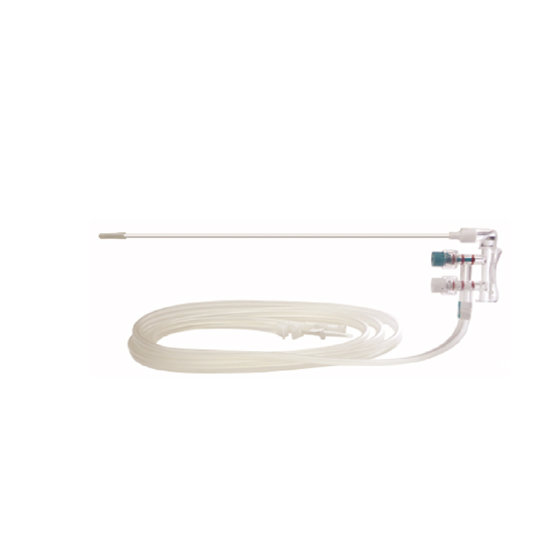


The material used in a wound protector directly affects flexibility, durability, fixation, and protection performance during surgical procedures. TPU (thermoplastic polyurethane) is commonly applied in adjustable-height (variable height) wound protectors, while silicone istypically used in non-adjustable (fixed height) designs.Each material offers different advantages depending on incision requirements, surgical workflow, and product design.
When selecting a surgical wound protector, hospitals and medical distributors should evaluate more than the material name. The complete design, including ring structure, protective channel, elasticity, tear resistance, size compatibility, and sterilization performance, determines whether the device meets clinical requirements.
A wound protector creates a physical barrier between the incision edge and the surgical environment. During procedures, the device must maintain continuous contact with the wound while allowing sufficient access for surgeons.
The selected material influences several important performance characteristics:
Flexibility: Determines how easily the device adapts to different incision shapes and tissue conditions.
Elastic recovery: Affects how well the protective sleeve maintains contact after stretching.
Tear resistance: Helps maintain barrier integrity during instrument manipulation.
Transparency: Supports visibility of the protected area when required.
Biocompatibility: Ensures suitability for contact with surgical tissues.
For procurement teams, understanding these material differences helps match the wound protector design with the intended surgical application. Victor Medical offers both adjustable-height and fixed-height wound protectors to meet different clinical needs.
TPU, or thermoplastic polyurethane, is a flexible polymer widely used in medical devices that require elasticity, mechanical strength, and resistance to repeated deformation.
In adjustable-height (variable height) wound protectors, TPU is commonly used for the protective sleeve or channel because it can provide a balance between flexibility and durability, allowing the channel length to be adjusted according to different incision depths.
High flexibility: Allows the protective channel to adapt to different incision movements.
Good mechanical strength: Helps maintain structural integrity during surgical manipulation.
Elastic properties: Supports expansion and recovery during placement.
Lightweight construction: Allows comfortable handling during procedures.
TPU-based designs are often selected when the device requires a flexible membrane that can accommodate different incision depths and surgical movements. For example, Victor Medical's VIPA adjustable-height wound protector uses TPU film for its protective channel, combined with polyethylene rings to provide an adjustable structure for different incision requirements.
Silicone is another widely used medical material known for its softness, flexibility, and biocompatibility.
In fixed-height (non-adjustable) wound protector designs, silicone can provide a soft interface around the incision while maintaining sufficient elasticity for surgical positioning, offering a stable channel length suitable for standardized incision sizes.
Soft tissue contact: Provides a flexible interface with the incision area.
Elasticity: Allows stretching while maintaining shape stability.
Temperature resistance: Supports compatibility with medical sterilization processes.
Chemical stability: Provides reliable material performance during clinical use.
Silicone wound protectors may be preferred in applications where soft material characteristics and consistent fixed channel height are important considerations. Victor Medical's VIPB single-use surgical wound protector uses silicone for its ring and channel structure, providing a different material option compared with the TPU-based VIPA adjustable-height series.
Neither TPU nor silicone is universally better. The appropriate material depends on the intended application, product structure, and required performance characteristics.
| Performance Factor | TPU (Variable Height) | Silicone(Fixed Height) |
| Flexibility | High flexibility with good recovery characteristics | Soft and highly elastic |
| Mechanical strength | Good resistance to stretching and deformation | Good flexibility with softer characteristics |
| Tissue contact | Suitable for flexible protective channels | Suitable where soft contact is preferred |
| Design applications | Often used for adjustable or flexible structures | Often used for soft fixed-height structures |
| Selection priority | Durability, flexibility, and structural adaptability | Softness, elasticity, and material stability |
Hospitals should evaluate the complete wound protector system rather than selecting materials independently. Ring design, channel dimensions, and surgical requirements all influence final performance.
Victor Medical's VIPA series (TPU-based adjustable height) and VIPB series (silicone-based fixed height) provide two complementary options for different incision management needs.
The performance of a surgical wound protector depends on how the material interacts with the overall device structure.
The protective channel must maintain a continuous barrier between the wound edge and external contamination sources. Material strength and elasticity influence whether the barrier remains stable during surgery.
Some wound protectors provide both protection and wound edge retraction. In these designs, material elasticity affects how the device maintains tension around the incision.
A suitable material allows healthcare professionals to position the device efficiently without excessive resistance or difficulty during insertion.
Material selection should support appropriate tissue interaction while maintaining the intended protective function. Manufacturers must evaluate biocompatibility and performance according to applicable medical device requirements.
The performance of a surgical wound protector depends on how the material interacts with the overall device structure. Adjustable-height protectors using TPU allow surgeons to customize the channel length to match varying tissue thickness, while fixed-height silicone protectors offer consistent, soft protection for standardized incision sizes.
Both designs from Victor Medical aim to maximize incision retraction, improve operational vision, reduce tissue damage through uniform tension, and help prevent incision contamination or tumor implantation during abdominal, small-incision, and endoscopic procedures.
When choosing between adjustable-height TPU and fixed-height silicone wound protectors, hospitals and distributors should consider incision size range, required channel adjustability, tissue contact preference, and overall surgical workflow.
Material selection is only one part of procurement evaluation. Hospitals should review the complete product specification before purchasing.
| Evaluation Item | Key Considerations |
| Material | TPU, silicone, or other medical-grade material specifications |
| Size Range | Compatibility with different incision lengths and depths |
| Device Structure | Ring design, channel construction, and fixation method |
| Performance | Flexibility, durability, barrier integrity, and usability |
| Sterilization | Validated sterilization process and sterile packaging |
| Supplier Capability | Manufacturing quality, documentation support, and supply stability |
For medical distributors, working with manufacturers that provide detailed technical specifications and consistent product availability helps reduce purchasing risks.
TPU and silicone each provide valuable material characteristics for wound protector applications. TPU offers flexibility, mechanical strength, and structural adaptability, while silicone provides softness, elasticity, and stable medical performance.
The best choice depends on the complete design of the wound protector, including ring structure, channel dimensions, surgical requirements, and intended application.
For hospitals and distributors, selecting a reliable surgical wound protector supplier requires evaluating material quality, product design, regulatory documentation, and manufacturing capability together.
Victor Medical provides medical-grade silicone wound protector solutions for different surgical requirements. Buyers can contact Victor Medical to discuss product specifications, applications, and procurement needs.
Common materials include TPU and silicone, which provide different flexibility, durability, and elasticity characteristics.
Neither material is always better. The suitable choice depends on the device design and surgical application.
Silicone provides softness, elasticity, and stable medical material performance for certain wound protection applications.
TPU provides flexibility and mechanical strength, making it suitable for protective channels requiring adaptability.
Hospitals should evaluate material, size, design, sterilization, clinical requirements, and supplier reliability.
Most wound protectors are designed as sterile single-use medical devices according to manufacturer instructions.

 English
 français
 Español
 italiano
 русский
 Türkçe
 português
 العربية