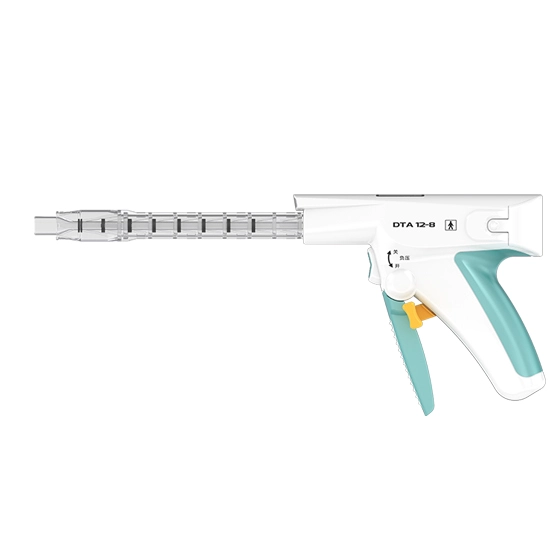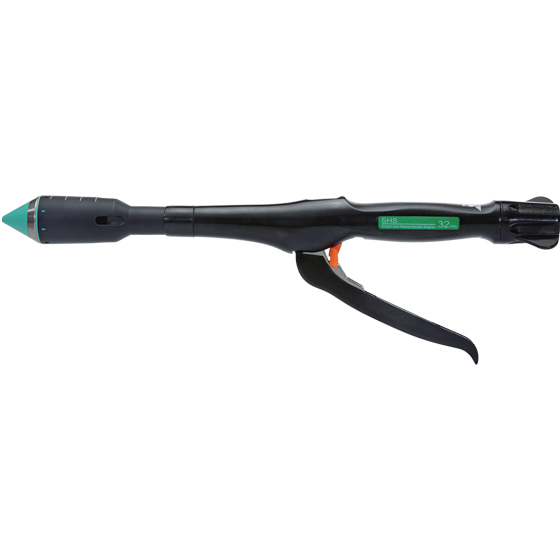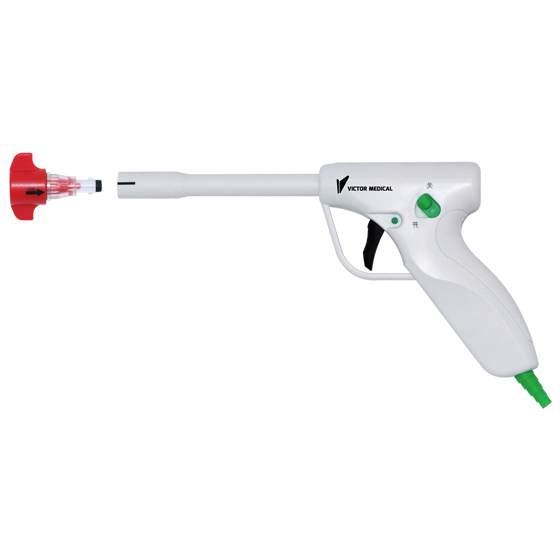


The main difference between a powered circular stapler and a manual circular stapler is how the firing mechanism is activated. Powered devices use a motor-driven mechanism to complete the firing cycle, while manual devices require the surgeon to apply force through a mechanical handle. Both are designed to create circular anastomoses, but they differ in firing control, operator effort, device handling, and procurement requirements.
For hospitals and surgical instrument distributors, the best choice depends on the surgical procedure, tissue characteristics, staple formation performance, surgeon familiarity, and total purchasing cost. Powered firing may reduce dependence on manual grip force, but clinical outcomes also depend on tissue preparation, perfusion, anastomotic technique, and device-specific performance.
Both types of circular staplers are used to create an anastomosis between suitable hollow organs. During firing, the device deploys circular rows of staples and cuts the tissue inside the staple line to establish a passage between the joined structures.
The principal distinction is how mechanical energy is delivered during the firing cycle.
| Feature | Powered Circular Stapler | Manual Circular Stapler |
| Firing mechanism | Motor-driven firing activation | Manually operated mechanical handle |
| Operator effort | Requires less physical force for firing | Requires manual force to complete firing |
| Firing consistency | Motorized actuation may reduce variability in applied firing force | Depends partly on mechanical design and operator activation |
| Tissue compression | Controlled by device design and approximation mechanism | Controlled by device design and approximation mechanism |
| Power requirements | Requires a functional power source | Does not require electrical power |
| Training requirements | Includes powered controls, indicators, and device-specific procedures | Focuses on mechanical approximation, firing, and release |
| Procurement considerations | Power system, device availability, technical support, and total cost | Mechanical reliability, sizing, usability, and supply consistency |
Neither firing mechanism automatically guarantees a better anastomosis. The complete circular stapling device, including its anvil, staple cartridge, compression mechanism, and circular knife, must perform reliably.
Victor Medical's circular staplers incorporate a one-piece anvil for strong support and consistent "B"-shaped staple formation, along with a single-edged circular knife for sharper cutting.
Firing control is an important consideration because circular staplers must deliver sufficient mechanical force to form staples consistently while cutting the tissue inside the staple line.
A powered circular stapler uses an integrated motorized mechanism to activate the firing process. This reduces the physical effort required from the surgeon and may provide more consistent actuation than manual firing.
However, powered operation does not automatically guarantee uniform tissue compression or staple formation. These characteristics depend on the specific stapler's mechanical structure, staple geometry, tissue compatibility, and operating instructions.
Manual circular staplers use a mechanical handle to initiate and complete firing. The surgeon supplies the necessary activation force, while the device's internal mechanism transfers that force to the staple-forming and cutting components.
Manual devices remain established options for gastrointestinal anastomosis and can provide reliable performance when correctly selected and operated. Victor Medical's manual circular staplers feature an indicated window with a tissue compression scale, allowing the surgeon to fire only when indicators are within the green zone for safer suture formation.
Proper tissue compression is essential for achieving the intended staple formation.
Insufficient compression may contribute to incomplete staple formation, while excessive compression can damage tissue or compromise perfusion.
Important factors include:
Tissue thickness: Must remain within the device's specified operating range.
Staple formation height: Determines the final configuration of the formed staples.
Anvil alignment: Supports accurate staple formation and circular cutting.
Compression control: Helps achieve the intended tissue approximation before firing.
Firing completion: The device must complete its specified firing and cutting cycle.
Victor Medical's design includes a 5.8 mm extra-thin anvil for easier placement into the purse-string and a variable-speed tail that protects the stoma during removal while promoting uniform tissue compression during closure. A patented clamping slot design further supports smooth placement and reduces tissue trauma.
Hospitals should request manufacturer-provided staple formation and mechanical performance information rather than evaluating products solely by their powered or manual classification.
The impact of stapler design on surgical workflow depends on the procedure, device handling characteristics, surgical team experience, and operating conditions.
Before firing, both powered and manual devices require appropriate positioning, tissue approximation, and confirmation that the intended anastomosis can be performed safely.
The anvil design, shaft configuration, device diameter, and approximation mechanism influence handling and positioning.
Powered firing does not eliminate the need for careful tissue assessment and surgical preparation. Victor Medical's extra-thin anvil and patented clamping slot are specifically intended to facilitate smoother insertion and more controlled approximation in gastrointestinal procedures.
Powered devices may reduce the physical effort associated with firing, which can be relevant during procedures involving challenging instrument positioning.
Manual devices avoid dependence on an electrical power source and may be familiar to surgical teams with established experience using conventional circular staplers.
Differences in firing activation do not necessarily translate into shorter overall operating times. Procedure duration is also affected by surgical complexity and the steps required before and after anastomosis.
Following circular stapler surgery, the surgical team must assess the completed anastomosis according to the procedure and device instructions.
Relevant assessments may include inspection of the retrieved tissue rings, verification of hemostasis, and evaluation of anastomotic integrity using clinically appropriate methods.
These requirements apply to both powered and manual stapling systems.
Powered circular staplers offer potential advantages in firing consistency and reduced manual activation force. However, clinical evidence does not establish that every powered device provides better outcomes than every manual circular stapler.
Some comparative studies and meta-analyses have reported lower rates of anastomotic leakage or postoperative bleeding with particular powered circular staplers.
Other analyses have found no statistically significant reduction in anastomotic leakage, particularly after accounting for study design and differences between patient groups.
A 2026 systematic review and meta-analysis of left-sided colorectal anastomoses found no statistically significant reduction in anastomotic leakage with powered circular staplers, although postoperative bleeding was lower in the pooled analysis.
These findings should be interpreted alongside the limitations of largely observational evidence and differences among device designs.
Clinical outcomes depend on additional factors, including:
Tissue perfusion and viability
Anastomotic tension and tissue thickness
Patient characteristics and comorbidities
Surgical technique and operator experience
Device selection and correct use
Therefore, hospitals should assess device-specific clinical evidence rather than assuming that motorized firing alone provides superior safety.
Procurement teams should evaluate technical specifications, clinical requirements, manufacturing quality, and total ownership costs when comparing powered and manual circular staplers.
| Evaluation Item | What Buyers Should Confirm |
| Firing Mechanism | Powered or manual activation, control responsiveness, and completion indicators |
| Stapler Diameter | Available sizes and suitability for intended anatomical applications |
| Staple Specifications | Staple quantity, unformed height, and final formation height |
| Tissue Compatibility | Permitted tissue thickness and compression requirements |
| Mechanical Performance | Staple formation consistency, cutting performance, and device reliability |
| Powered System | Power source, activation safeguards, and applicable fault-handling instructions |
| Sterilization | Validated sterilization, packaging integrity, and shelf life |
| Regulatory Documentation | Applicable product registrations, quality certifications, and technical documentation |
| Supply Requirements | Available models, minimum order quantity, lead time, and technical support |
Victor Medical supplies single-use circular staplers for gastrointestinal anastomosis, with outer diameters ranging from 21 mm to 33 mm (including intermediate sizes 23 mm, 27 mm, and 31 mm). Its published manual circular stapler specifications include:
| Model | Outer Diameter | Staple Quantity | Formed Staple Height |
| (E)SCS21 / SCSA21 | 21 mm | 18 | 1.9 mm |
| (E)SCS23 / SCSA23 | 23 mm | 20 | 1.9 mm |
| (E)SCS25 / SCSA25 | 25 mm | 22 | 2.0 mm |
| (E)SCS27 / SCSA27 | 27 mm | 24 | 2.0 mm |
| (E)SCS29 / SCSA29 | 29 mm | 26 | 2.0 mm |
| (E)SCS31 / SCSA31 | 31 mm | 28 | 2.2 mm |
| (E)SCS33 / SCSA33 | 33 mm | 32 | 2.2 mm |
Victor Medical also describes powered circular stapling technology within its broader product information. Buyers interested in powered configurations should confirm the exact available model, firing mechanism, specifications, and applicable registration directly with the manufacturer.
Detailed information about the company's circular stapler range is available on the Victor Medical Circular Stapler product page.
Hospitals should consider more than the purchase price per device.
Additional factors may include staff training, inventory requirements, device availability, technical support, and costs associated with the powered system.
For distributors, reliable supply and complete regulatory documentation are especially important when introducing a new circular stapling device into a market.
Victor Medical also provides other open surgical instruments, allowing medical distributors to review related product categories when planning procurement.
Powered and manual circular staplers differ primarily in their firing mechanisms, operator effort, and control characteristics. Powered systems reduce reliance on manual firing force, while manual staplers provide an established mechanical approach to circular anastomosis.
Neither system should be selected solely on the assumption that it guarantees better clinical outcomes. Staple formation, tissue compatibility, anvil design, surgical technique, and device-specific evidence all contribute to performance.
For hospitals and distributors, selecting an appropriate circular stapling device requires balancing clinical requirements, technical specifications, user training, and procurement costs.
Victor Medical offers circular staplers in multiple sizes for gastrointestinal surgical applications. Buyers can contact Victor Medical with their required stapler diameter, intended application, estimated order quantity, and destination market to discuss available configurations, technical documentation, sample evaluation, and purchasing requirements.
A powered circular stapler uses a motor-driven mechanism to activate staple formation and circular cutting during anastomosis.
Powered devices use motorized firing, while manual devices require the surgeon to activate a mechanical firing handle.
Some studies report benefits, but evidence remains mixed. A reduction in leakage has not been consistently established across devices and study populations.
Victor Medical lists circular stapler diameters from 21 mm to 33 mm, depending on the model.
They reduce manual firing effort, but handling, positioning, and training requirements depend on the specific device. Victor Medical's designs incorporate practical features such as the tissue compression scale and extra-thin anvil to support controlled use.
Hospitals should evaluate product specifications, firing reliability, clinical evidence, regulatory documentation, training, and supply support.

 English
 français
 Español
 italiano
 русский
 Türkçe
 português
 العربية